
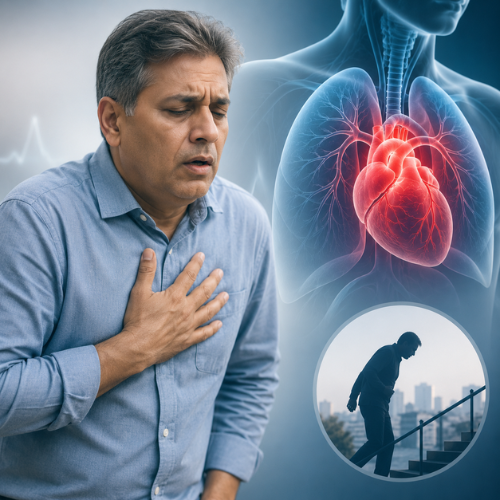
Shortness of breath is one of those symptoms that makes people pause. It arrives quietly at first — a slight struggle while climbing stairs, a moment of breathlessness while walking fast, or a sudden feeling of "not getting enough air."
At Rhythm Heart & Diet Clinic in Thane and Kalyan, Dr. Pankaj Patil often hears patients describe it in everyday language: "Doctor, I feel tired even with small activities. I don't know why."
Sometimes the cause is simple. Sometimes it's the body's way of asking for attention. This article brings together Dr. Patil's experience, real-life observations, and medically valuable insights to help you understand shortness of breath in a clear, relatable way.
When Breathing Feels Different: What Shortness of Breath Really Means
Breathing is automatic — until it isn't. Shortness of breath (dyspnea) is the feeling that breathing requires more effort than usual.
"Shortness of breath doesn't always mean something serious. But it's a symptom we should respect, because it tells us the body is working harder than it should."
It can come from the lungs, the heart, the muscles, or even the mind.
Everyday Reasons You Might Feel Breathless
Not all breathlessness is dangerous. Some causes are simple and temporary:
- Low fitness levels
- Seasonal changes or humidity
- Anxiety or stress
- Lack of sleep
- Dehydration
- Anemia
- Viral infections
- Allergies
"If breathlessness appears during exertion after long periods of inactivity, it's usually due to low fitness. The body adapts with time."
These causes usually improve with rest, hydration, and gradual activity.
When Breathlessness Points to the Heart
Sometimes, shortness of breath is linked to the heart's ability to pump blood efficiently. Heart-related breathlessness may feel like:
- Difficulty breathing while lying down
- Breathlessness during simple activities
- Sudden nighttime breathlessness
- Chest discomfort with breathing
- Swelling in the legs or feet
- Fatigue that feels unusual
"The heart and lungs work together. When the heart struggles, the lungs feel the pressure first."
Conditions like heart failure, valve problems, or rhythm disturbances can cause breathlessness.
Breathlessness and the Lungs: A Shared Story
The lungs are the body's oxygen gateway. Breathlessness may arise from:
- Asthma
- COPD
- Lung infections
- Post-viral weakness
- Pollution exposure
- Smoking
India's rising pollution levels have made lung-related breathlessness more common, especially in cities.
"Many patients think breathlessness is always heart-related. But lung issues are equally common, especially after infections."
Why Shortness of Breath Is Increasing in Young Adults
A surprising trend is the rise of breathlessness in people under 40. The reasons are modern and relatable:
- Sedentary lifestyle
- Long screen time
- Irregular sleep
- High stress
- Poor posture
- Vitamin deficiencies
- Post-viral fatigue (especially after respiratory infections)
Studies show that over 35% of young adults report occasional breathlessness, often linked to lifestyle factors.
"Young adults often ignore breathlessness, assuming it's just tiredness. But understanding the cause helps prevent future issues."
How Doctors Identify the Cause with Simple Tests
Evaluating breathlessness is usually straightforward. At Rhythm Heart & Diet Clinic, the process may include:
- ECG — checks heart rhythm
- 2D Echo — evaluates heart function
- Chest X-ray — checks lung health
- Blood tests — anemia, thyroid, infection markers
- Pulse oximetry — oxygen levels
- TMT — checks exertion tolerance
"Most patients feel relieved after evaluation. Either we find a simple cause, or we catch an issue early — both are good outcomes."
Small changes that help you breathe easier
- Stay hydrated
- Improve sleep routine
- Practice deep breathing
- Walk for 20–30 minutes daily
- Avoid heavy meals late at night
- Reduce caffeine and smoking
- Maintain good posture
- Take breaks during long screen hours
These changes support both heart and lung health.
When Should You Consider Consulting a Cardiologist?
People often choose to meet a cardiologist like Dr. Pankaj Patil when:
- Breathlessness is new or unexplained
- It keeps returning
- It appears during simple activities
- It comes with chest discomfort
- It wakes you up from sleep
- It is associated with swelling in the legs
- You have diabetes, BP, or thyroid issues
- You have a family history of heart disease
Let's understand breathlessness is the body's way of saying slow down and listen. — Says Dr Pankaj Patil
Frequently Asked Questions
1. Why do I feel breathless even when I'm not doing much?
Low fitness, anemia, stress, or mild infections can cause breathlessness during simple activities.
2. Can anxiety cause shortness of breath?
Yes. Anxiety can tighten breathing muscles and create a sensation of breathlessness.
3. Is breathlessness always related to the heart?
No. Lung issues, anemia, thyroid problems, and lifestyle factors can also cause breathlessness.
4. Should I worry if breathlessness happens at night?
Nighttime breathlessness should be evaluated, especially if it wakes you from sleep.
5. When should I see a cardiologist for breathlessness?
If breathlessness is new, persistent, or associated with chest discomfort, fatigue, or swelling, evaluation helps identify the cause.
Feeling breathless more often than usual?
Get an evaluation with Dr Pankaj Patil at Rhythm Heart & Diet Clinic, Kalyan or Thane.
Book an AppointmentDisclaimer: This article is for general awareness. Please consult a heart specialist or cardiologist near you for personalised medical advice.