
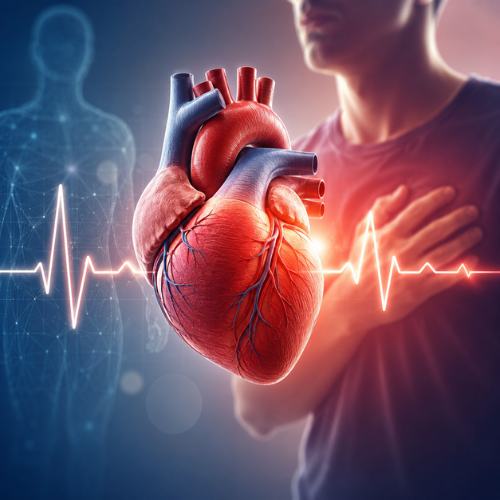
Some symptoms arrive quietly, without warning. Palpitations are one of them. A sudden flutter. A skipped beat. A racing heartbeat that makes you pause for a second.
At Rhythm Heart & Diet Clinic in Thane and Kalyan, Dr. Pankaj Patil often hears patients describe it in their own words: "Doctor, it feels like my heart jumps for a moment… then settles."
For many, this sensation is harmless. For some, it's the body's way of asking for attention. This article brings together Dr. Patil's experience, real-world stories, and simple explanations to help you understand palpitations in a calm, clear, and reassuring way.
A Moment That Makes You Stop: What Palpitations Really Are
Palpitations are simply the awareness of your heartbeat. You may feel:
- A flutter
- A thud
- A racing rhythm
- A pause followed by a strong beat
"Most people don't feel their heartbeat at all. When they suddenly do, it feels alarming — even if the cause is simple."
Studies show that over half of adults experience palpitations at least once, and most episodes are not dangerous.
Everyday Triggers: Why Your Heart Speeds Up Unexpectedly
Many palpitations are linked to daily habits or temporary changes in the body. Common triggers include:
- Stress or emotional tension
- Lack of sleep
- Dehydration
- Excess tea, coffee, or energy drinks
- Skipping meals
- Fever or infections
- Hormonal shifts
- Intense exercise
"If your palpitations appear during stress or after caffeine and settle quickly, they're usually harmless."
These episodes are the heart's natural response to stimulation — not a sign of disease.
When the Rhythm Isn't Smooth: Palpitations Linked to Heart Rhythm Issues
Sometimes, palpitations come from irregular electrical activity in the heart. These are called arrhythmias. They may feel like:
- Rapid pounding
- Irregular beats
- Sudden bursts of fast rhythm
- Heart "skipping" beats
These episodes may need attention, especially if they:
- Last longer than a few minutes
- Come without a clear trigger
- Occur during physical activity
- Wake you from sleep
- Come with dizziness or breathlessness
"Arrhythmias are not always dangerous, but they should be evaluated. Early diagnosis helps prevent complications."
Why Young Adults Are Experiencing More Palpitations Today
A surprising trend Dr. Patil sees is the rise of palpitations in people under 40. The reasons are modern and relatable:
- Long screen time
- Irregular sleep cycles
- High caffeine intake
- Work stress
- Skipped meals
- Sedentary lifestyle
India now ranks among the top countries for stress-related symptoms, and palpitations are one of the most common.
"Many young adults come in worried. But once we identify the trigger — dehydration, stress, or caffeine — they feel reassured."
How Doctors Find the Real Cause: Simple Tests, Clear Answers
Evaluating palpitations is usually straightforward. At Rhythm Heart & Diet Clinic, the process may include:
- ECG — checks the heart's rhythm
- Holter Monitoring — 24-hour rhythm recording
- 2D Echo — checks heart structure and pumping
- Blood tests — thyroid, electrolytes, haemoglobin
"Most patients feel relieved after checkup. Either we find a simple cause, or we catch an issue early — both are good outcomes."
Small lifestyle changes that make a big difference
- Reduce tea, coffee, and energy drinks
- Drink water regularly
- Maintain regular meal timings
- Improve sleep quality
- Practice slow breathing or relaxation
- Limit screen time before bed
- Avoid sudden intense workouts if unprepared
These changes support a calmer, steadier heartbeat.
When Should You Consider Consulting a Cardiologist?
People often choose to meet a cardiologist like Dr. Pankaj Patil when:
- Palpitations keep returning
- You feel stronger palpitations or different from usual
- They come with dizziness or breathlessness
- They occur during exercise
- They last longer than a few minutes
- You have thyroid issues, anemia, BP, or diabetes
- You have a family history of heart rhythm problems
Remember, palpitations can be unsettling, but they're not always dangerous. Understanding your symptoms is the first step. If something feels unusual or keeps coming back, it's better to consult a heart specialist. — Dr Pankaj Patil
Frequently Asked Questions
1. Why do palpitations happen suddenly?
Sudden palpitations often occur due to stress, caffeine, dehydration, or hormonal changes. They usually settle quickly.
2. Are palpitations dangerous?
Most are harmless. But palpitations with dizziness, chest discomfort, or breathlessness should be evaluated.
3. Can thyroid problems cause palpitations?
Yes. Both high and low thyroid levels can affect heart rhythm.
4. How long should palpitations last before I worry?
If they last more than a few minutes or feel very fast or irregular, a proper cardiac checkup is helpful.
5. Should I see a cardiologist for palpitations?
If palpitations are new, frequent, or associated with other symptoms, consulting a cardiologist helps rule out rhythm issues.
Feeling your heart flutter or race?
Get an ECG and rhythm evaluation with Dr Pankaj Patil at Rhythm Heart & Diet Clinic, Kalyan or Thane.
Book an AppointmentDisclaimer: This article is for general awareness. Please consult a heart specialist or cardiologist near you for personalised medical advice.