
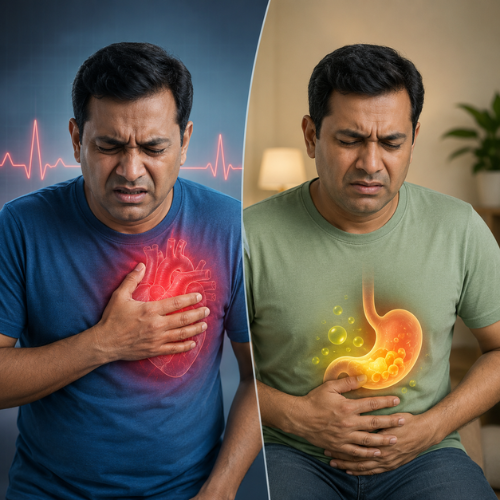
Chest discomfort is one of the most confusing symptoms people experience. At Rhythm Heart & Diet Clinic in Thane and Kalyan, Dr. Pankaj Patil often meets patients who walk in saying, "Doctor, I think it's just gas." But as he gently explains, "Acidity and cardiac pain can feel surprisingly similar. That's why people delay seeking help."
This article brings together his real-world observations, simple explanations, and medically valuable insights — written in a way every reader can understand and share.
Why Chest Pain and Gas Feel So Similar
Chest pain is not always sharp or dramatic. In fact, nearly 30–40% of heart-related discomfort in Indians begins as mild, nagging pain that people mistake for acidity.
"Some patients take antacids for two days thinking it's gas. But their ECG tells a different story."
The reason for this confusion is simple: the nerves supplying the heart and upper digestive system overlap. So the brain sometimes struggles to differentiate the source.
How Gas or Acidity Pain Usually Feels
Gas-related discomfort is extremely common, especially after:
- Heavy, oily, or spicy meals
- Late-night eating
- Long gaps between meals
- Excess tea, coffee, or carbonated drinks
Typical features include:
- Burning sensation in the chest
- Sour taste or acidity
- Bloating or burping
- Pain that improves with antacids
- Discomfort that changes with position
- Pain in the upper abdomen moving upward
This pain is uncomfortable but usually not dangerous.
How Heart-Related Chest Pain Usually Feels
Cardiac pain has a different character. Dr. Patil explains it simply:
"Heart pain is more like pressure or heaviness — as if someone is sitting on your chest."
Common features include:
- Tightness, heaviness, or squeezing
- Pain in the center or left side of the chest
- Pain spreading to the arm, jaw, back, or neck
- Pain during walking, climbing stairs, or emotional stress
- Pain with sweating, nausea, or breathlessness
- Pain lasting more than 5 minutes
This type of pain needs timely evaluation.
Red Flags: When Chest Pain Needs Medical Attention
You should consider medical evaluation if chest discomfort:
- Comes with breathlessness
- Is associated with sweating or dizziness
- Wakes you up from sleep
- Does not improve with antacids
- Appears during physical activity
- Comes with palpitations or fatigue
"If you have diabetes, high BP, or cholesterol, never ignore chest discomfort — even if it feels mild."
Why Many Indians Mistake Heart Pain for Acidity
In India, acidity is extremely common. But heart disease is also rising — and at younger ages.
- India sees heart attacks 10–15 years earlier than Western countries
- 1 in 4 cardiac patients today is below 45
- Diabetes and BP increase the risk of silent symptoms
This overlap makes it easy to misjudge the cause.
How Doctors Identify Whether It's Gas or Heart-Related
At Rhythm Heart & Diet Clinic, evaluation is simple and quick. Tests may include:
- ECG — first screening
- 2D Echo — checks heart function
- TMT — checks for blockages during exertion
- Blood tests — markers of heart strain
"Most patients feel relieved after a proper evaluation. Either we catch a problem early, or we reassure them that it's acidity."
Simple home measures if it's gas or acidity
- Eat smaller, lighter meals
- Avoid oily, spicy, and late-night food
- Reduce tea, coffee, and aerated drinks
- Don't lie down immediately after eating
- Stay hydrated
- Add fibre to your diet
If symptoms improve, it is likely acidity. If not, visit a heart clinic for checkup and consultation with a heart specialist.
When Should You Consider Consulting a Cardiologist?
People often choose to meet a cardiologist like Dr. Pankaj Patil when:
- Chest discomfort keeps returning
- Pain does not improve with antacids
- You experience breathlessness with the pain
- You have diabetes, high BP, or cholesterol
- You have a family history of heart disease
- You are above 40 and experiencing new symptoms
Remember, not every chest pain is serious, and not every acidity episode is harmless. When in doubt, get clarity. Your heart deserves timely attention. — Dr Pankaj Patil
Frequently Asked Questions
1. How do I know if my chest pain is gas or heart-related?
Gas pain usually improves with burping or antacids. Heart pain feels like pressure or heaviness and may spread to the arm or jaw.
2. Can acidity cause chest pain every day?
Yes, acidity can cause repeated discomfort, especially with irregular meals or spicy food. But persistent chest pain should be evaluated.
3. Does heart pain come and go?
Yes. Early cardiac symptoms can be intermittent. Pain during exertion is a warning sign.
4. Can gas cause left-sided chest pain?
It can — but left-sided pain with breathlessness or sweating should not be ignored.
5. When should I see a cardiologist?
If chest discomfort is new, recurring, or unexplained — especially if you have diabetes, BP, or cholesterol — evaluation helps rule out serious causes.
Not sure if it's gas or your heart?
Get a quick ECG and consultation with Dr Pankaj Patil at Rhythm Heart & Diet Clinic, Kalyan or Thane.
Book an AppointmentDisclaimer: This article is for general awareness. Please consult a heart specialist or cardiologist near you for any medical advice.